You know that feeling when you're trying to eat better, but tracking every meal feels like a part-time job? You open your calorie counting app, stare at the search bar, and suddenly remembering whether you had 150g or 200g of chicken seems impossible. So you guess. Or worse, you just stop tracking altogether.
That's the problem we wanted to solve with Spartan Nutrition—an MVP built for the gym I train at. Everyone there agrees: the hardest part isn't getting to the gym. It's the nutrition. You can nail your workouts five days a week and still not see results if your diet isn't dialed in.
What We Built
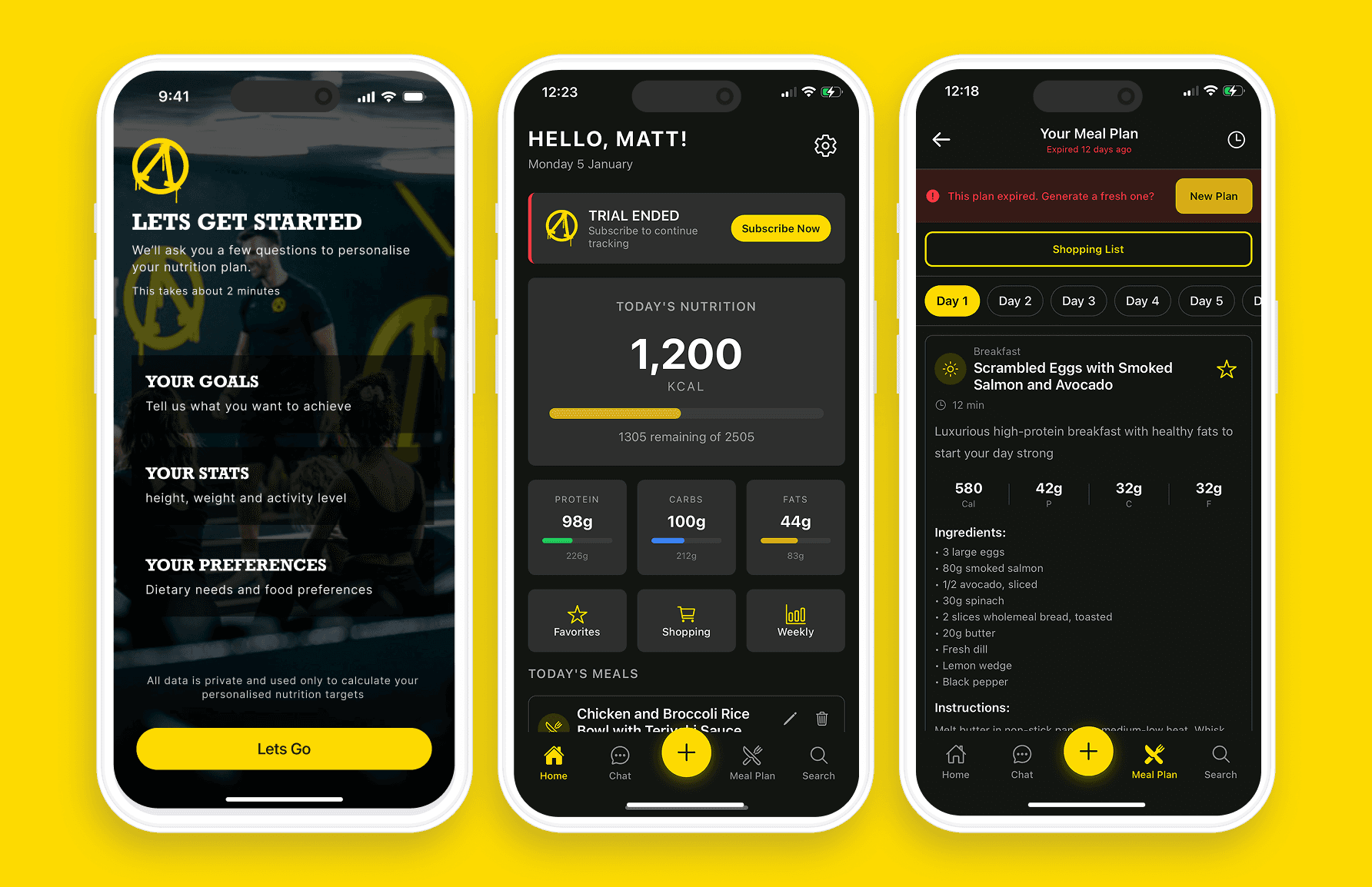
Spartan Nutrition is an AI-powered nutrition tracker that strips away the complexity. Snap a photo of your meal, and the AI analyses it to estimate calories, protein, carbs, and fats. No searching through databases. No weighing portions. Just point, shoot, and move on with your day.
The core features are deliberately minimal:
Photo-based logging: Take a picture of your food, get instant macro estimates
Daily tracking dashboard: See your totals at a glance, with a simple progress view against your goals
That's it. No social features, no recipe databases, no gamification. We built exactly what you need to answer one question: am I eating roughly what I intended to eat today?
The Build Process
We used Expo for the mobile app development, which gave us the speed and flexibility we needed for a one-week build. The interesting bit was the AI integration. We connected to Claude's vision API to handle the image analysis, which turned out to be both the easiest and hardest part of this project.
Easy because the API is genuinely impressive—it can identify foods with surprising accuracy. Hard because nutrition estimation from photos is fundamentally imprecise. A bowl of pasta could be 300 calories or 800 depending on portion size, oil used, and what's hiding underneath.
We made a decision early on: we wouldn't pretend to be more accurate than we are. The app tells you these are estimates. It's designed for people who want to be roughly right rather than precisely wrong (or precisely overwhelmed by manual tracking).
What Went Well
The core functionality came together quickly. By day three, we had a working prototype that could analyse food photos and return macro breakdowns. The UI stayed clean—we resisted the urge to add features just because we had time left.
We also nailed the onboarding flow. You set your daily calorie and macro targets in about 30 seconds, then you're straight into logging. No account creation walls, no lengthy questionnaires about your fitness goals and favourite cuisines.
What Was Harder Than Expected
Image quality matters more than we anticipated. Well-lit photos from directly above work brilliantly. Dim restaurant lighting or weird angles? The AI struggles. We added a simple tip screen encouraging better photos, but we couldn't solve the fundamental limitation—the model can only work with what it can see.
We also cut the meal history feature we originally planned. It would have let you see past meals and re-log favourites with one tap. Sounds simple, but it required building a proper database structure and authentication system. For a one-week sprint, that was scope creep. We made the call to ship without it.
The Honest Truth About MVP Sprints
This is exactly how we approach client projects at Precode. Week-long sprints force clarity. You can't build everything, so you have to identify what actually matters. For Spartan Nutrition, that meant one genuinely useful feature—AI photo logging—executed well, rather than five half-finished ideas.
The product isn't perfect. The estimates aren't laboratory-precise. There's no social sharing, no meal planning, no integration with fitness trackers. But it solves the specific problem we set out to solve: making nutrition tracking less tedious for people who are already putting in the work at the gym.
That's the point of an MVP. Not to build everything eventually. To build the smallest thing that proves the concept works and people find it useful.
Join the Waitlist
We're currently testing Spartan Nutrition with members at the gym before a wider release. Want early access? Join the waitlist at spartan-topaz.vercel.app and we'll let you know when it's ready.
We're four weeks into this challenge, with 48 more products to build. If you're curious about how we turn ideas into working products this quickly—or if you've got a concept that needs validating fast—let's talk about running an MVP sprint for your project.
Next week: something completely different. Follow along to see what we build.